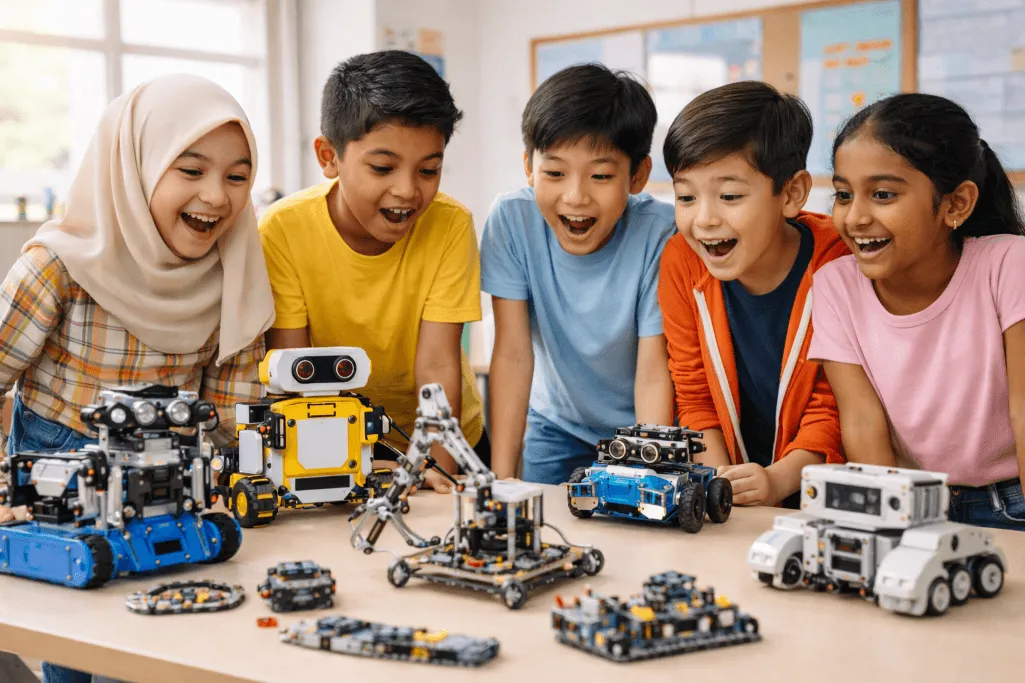

Pendidikan STEM is rapidly becoming a cornerstone of education in Malaysia. In Sekolah Kebangsaan (SK), integrating STEM (Science, Technology, Engineering, and Mathematics) equips students with critical skills such as problem-solving, creativity, and digital literacy. However, to make this vision a reality, schools need the right tools.
STEM equipment for schools not only supports hands-on learning but also helps students connect theory to practice. From simple science kits to advanced robotics, the right resources can transform a classroom into an engaging innovation hub.
This guide provides a complete supply checklist for STEM education in Sekolah Kebangsaan, ensuring teachers and administrators know what’s essential for strengthening Pendidikan STEM.
Strengthening Pendidikan STEM in Sekolah Kebangsaan
The Ministry of Education Malaysia has emphasised STEM learning as a strategy to prepare students for future careers. By equipping SK classrooms with quality STEM education kits, schools can:
- Encourage curiosity – Students experiment, build, and learn through discovery.
- Develop 21st-century skills – Collaboration, coding, design thinking, and problem-solving.
- Promote inclusivity – Making STEM accessible to every student, regardless of background.
- Prepare for IR4.0 – Robotics and automation skills are highly demanded in modern industries.
Investing in STEM equipment for schools is therefore not just about meeting curriculum standards—it’s about creating opportunities for lifelong learning.
Core STEM Equipment for Sekolah Kebangsaan
Every school has unique needs, but certain tools form the foundation of effective STEM learning. Below is a breakdown of must-have categories:
Every school has unique needs, but certain tools form the foundation of effective STEM learning. Below is a breakdown of must-have categories, with explanations of how each type of equipment benefits the classroom.
1. Science Equipment
Science equipment forms the backbone of STEM learning, allowing students to conduct hands-on experiments and understand real-world scientific principles. Microscope sets help them explore biology in detail, while lab kits with beakers and cylinders support chemistry activities.
Safety equipment ensures proper lab practices, and renewable energy kits expose students to sustainable technologies like solar and wind power. Together, these tools bring science concepts to life beyond textbooks.
2. Technology Tools
Technology plays a vital role in preparing students for a digital future. Laptops or tablets give students access to interactive STEM lessons and digital resources that enhance understanding. Smart classroom tools such as interactive whiteboards help teachers deliver engaging, collaborative lessons.
Simple circuit kits and basic electronic components allow students to explore how electricity works and build their first functional projects. These tools strengthen digital literacy and help students apply technology creatively to solve problems.
3. Engineering Kits
Engineering kits encourage creativity and critical thinking through design and construction. Building blocks and structural sets help students understand core engineering principles such as stability and balance. Bridge-building and challenge kits simulate real-world projects, teaching teamwork, problem-solving, and innovation.
Other resources, such as model-making and design activity sets, allow students to turn their ideas into physical prototypes. By engaging with these materials, students gain practical exposure to innovation, design thinking, and hands-on engineering problem-solving.
4. Mathematics Resources
Mathematics resources connect abstract concepts to real-world applications. Geometry kits and measurement tools help students understand shapes, sizes, and spatial reasoning. Graphing calculators and apps simplify complex problem-solving and data analysis, while sensors and probes provide hands-on experience with data collection.
These tools make math more interactive and engaging, helping students to visualise problems and strengthen logical thinking. By using such resources, schools can foster confidence and accuracy in mathematical skills.
Introducing Robotics with STEM Robotics Kits
One of the fastest-growing areas of Pendidikan STEM is robotics education. Robotics kits are not only fun but also highly educational. They combine coding, engineering, and problem-solving in a hands-on environment.
Recommended robotics tools for SK classrooms include:
- Entry-level robotics kits with drag-and-drop coding for beginners.
- Modular robotics systems that can be upgraded as students advance.
- Sensors, motors, and controllers to build real-life functional robots.
Benefits of introducing robotics in Sekolah Kebangsaan:
- Sparks student interest in coding and automation.
- Encourages teamwork through group projects.
- Builds resilience by teaching trial-and-error problem-solving.
- Aligns with Malaysia’s digital economy goals.
Practical Checklist for Sekolah Kebangsaan
Here’s a practical STEM supply checklist that school leaders can adapt when planning for their classrooms:
| Category | Essential Items | Purpose |
| Science | Microscopes, lab kits, safety gear | Hands-on experiments and scientific inquiry |
| Technology | Tablets, coding apps, circuit kits | Digital literacy and coding foundation |
| Engineering | Building sets, 3D printer, maker tools | Design, build, and innovation skills |
| Mathematics | Geometry sets, sensors, calculators | Visual and applied math learning |
| Robotics | Beginner-friendly robotics kits | Coding, automation, and problem-solving |
This checklist ensures that STEM implementation in SK is not only effective but also sustainable across different grade levels.
Implementation Tips for Teachers and Administrators
To maximise the impact of STEM resources, consider these strategies:
- Start small, grow gradually – Begin with essential kits, then expand into robotics and 3D printing.
- Provide teacher training – Tools are only as effective as the teachers using them.
- Encourage project-based learning – Real-world challenges keep students engaged.
- Integrate across subjects – Blend STEM activities into Bahasa Malaysia, English, and even Art for cross-disciplinary learning.
- Track progress – Use simple rubrics to measure student engagement and skills development.
How mftechglobal.com Supports Pendidikan STEM
At MFTech Global, we provide tailored STEM education kits, robotics kits, and digital learning solutions to help Sekolah Kebangsaan strengthen their Pendidikan STEM.
Our services include:
- Supplying core STEM equipment that meets curriculum needs.
- Customising robotics packages for different age groups.
- Providing teacher training and technical support to ensure smooth classroom integration.
- Offering future-ready solutions aligned with Malaysia’s IR4.0 goals.
With our expertise, schools can confidently implement STEM programmes that inspire students and meet national education standards.
Conclusion: Building a Future-Ready Generation
Equipping Sekolah Kebangsaan with the right STEM equipment for schools is a long-term investment in Malaysia’s future. From science kits to robotics, these resources help create an environment where curiosity, creativity, and problem-solving thrive.
By following the practical supply checklist and working with trusted partners like MFTech Global, schools can take real steps toward strengthening Pendidikan STEM and preparing students for the challenges and opportunities of tomorrow.
If you are a school administrator or educator looking to upgrade your STEM facilities, visit MFTech Global today to explore our full range of STEM education kits and robotics solutions. Together, let’s build a future-ready generation.