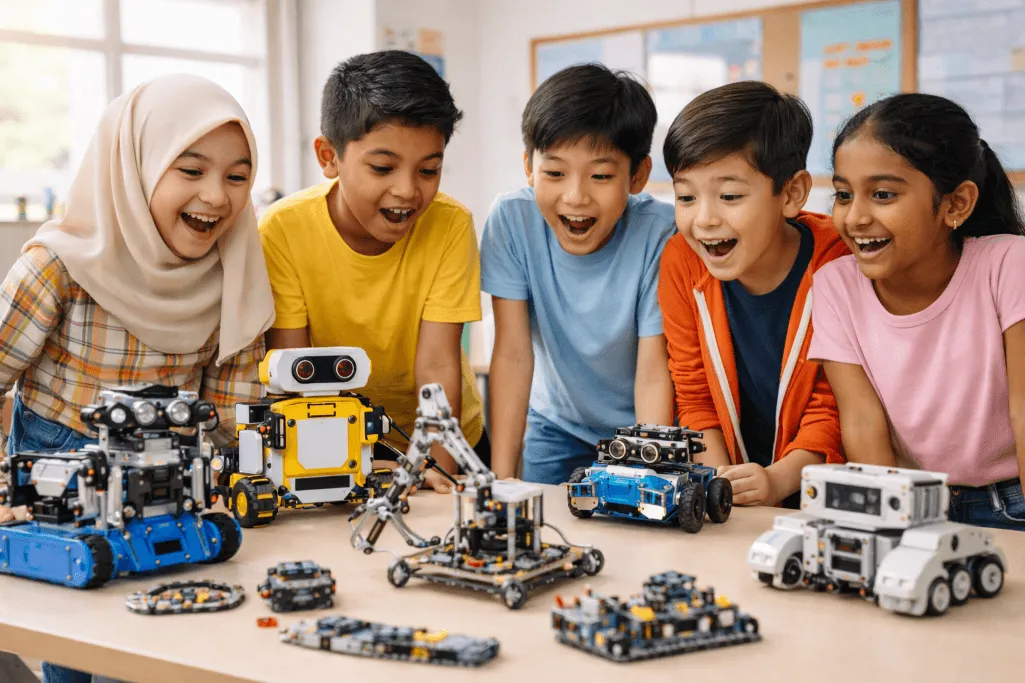

Robotics is no longer an enrichment add-on. It is fast becoming a strategic pillar in STEM education, digital literacy and Industry 4.0 readiness. When implemented correctly, Robotic Education Equipment enhances computational thinking, problem-solving skills and interdisciplinary learning.
However, many schools invest in robotics with high expectations—only to find that the equipment sits unused after the initial excitement fades.
Selecting the right robotic education equipment is not simply a procurement decision. It is an academic, operational and long-term strategic investment. Below are the most common mistakes schools make—and how to avoid them.
Prioritising Price Over Total Value
Budget constraints are real. Yet selecting robotics purely based on the lowest quotation often leads to long-term inefficiency.
Why price-first decisions fail:
- Low-cost kits may lack durability for classroom use
- Limited warranty or local support
- Ongoing subscription fees for software access
- Consumables and replacement parts not factored in
- Hidden teacher training costs
This is where Total Cost of Ownership (TCO) becomes critical. A cheaper kit that requires frequent replacement or extensive troubleshooting may cost more over three years than a slightly higher upfront investment in a structured platform.
Schools should evaluate:
- Hardware lifespan
- Software licensing model
- Maintenance and spare parts availability
- Training and onboarding support
A structured provider such as MFTech Global typically advises schools to assess lifecycle cost, not just purchase price.
Ignoring Curriculum Alignment
Robotics must support learning outcomes, not distract from them.
A common issue is purchasing impressive robotic kits that do not map to national or international curriculum standards. Teachers then struggle to integrate robotics into structured lesson plans.
Risks of poor alignment:
- Robotics becomes a co-curricular activity only
- Teachers treat it as an “extra” rather than core learning
- Students enjoy the activity but miss measurable academic outcomes
Effective Robotic Education Equipment should align with:
- STEM learning objectives
- Computational thinking frameworks
- Design and technology standards
- Assessment rubrics
When robotics connects directly to mathematics, physics, coding and engineering modules, it strengthens academic value. Schools considering robotics for Malaysian classrooms can explore structured solutions tailored to education standards through robotic education equipment for schools in Malaysia.
Curriculum-first selection ensures robotics enhances—not competes with—academic priorities.
Choosing Technology Without Teacher Preparedness
Even the most advanced robotics platform fails without confident teachers.
One of the largest barriers to successful robotics implementation is underestimating teacher readiness. Robotics requires not just technical understanding, but also pedagogical adaptation.
Common oversight areas:
- Lack of structured teacher training
- No onboarding workshops
- No lesson plan templates
- Limited troubleshooting support
Teacher confidence directly impacts student engagement. When educators feel uncertain, robotics sessions become rigid or overly controlled, reducing exploratory learning.
Schools should ask:
- Does the vendor provide professional development?
- Are there ready-to-use lesson plans?
- Is there ongoing technical support?
Comprehensive education technology support services can significantly reduce implementation risk and increase teacher adoption rates.
Investing in teacher capability is as important as investing in hardware.
Focusing Only on Hardware, Not Learning Experience
Many procurement decisions are driven by hardware specifications:
- Number of sensors
- Motor torque
- AI capability
- Coding complexity
While technical features matter, they do not automatically translate into effective learning.
Robotics education is about experience design, not chassis specifications.
What truly matters:
- Progressive learning pathways
- Scaffolded challenges
- Age-appropriate programming interfaces
- Hands-on, inquiry-based projects
Students learn best when robotics evolves with their cognitive development—from block coding to text-based programming, from guided builds to independent engineering projects.
A well-designed robotics ecosystem prioritises engagement, progression and measurable skill acquisition.
Neglecting Scalability and Future Growth
Many schools begin with a pilot programme, only to realise the platform cannot scale.
Scalability challenges include:
- Limited kits for large classes
- No advanced modules for higher grades
- Software not adaptable across age groups
- No integration with advanced STEM subjects
Robotic Education Equipment should support a vertical progression:
- Primary exposure
- Upper primary structured problem-solving
- Secondary advanced automation and programming
Without scalability, schools must switch platforms midway—creating learning disruption and additional cost.
When evaluating suppliers, ask about ecosystem expansion, modular upgrades and cross-grade compatibility.
Overlooking Inclusivity and Accessibility
Robotics should not be reserved for top-performing STEM students.
Modern educational robotics emphasises:
- Inclusive learning
- Accessibility for diverse learners
- Gender-neutral engagement
- Differentiated difficulty levels
Choosing highly complex platforms that only technically advanced students can operate creates exclusion.
Instead, schools should consider:
- Visual programming interfaces
- Multi-level task complexity
- Collaborative group-based challenges
- Support for varied learning speeds
Inclusive robotics programmes bridge digital divides and encourage broader participation across academic levels.
Insufficient Consideration of Support & Ecosystem
Robotics does not operate in isolation. The surrounding ecosystem determines long-term success.
Weak ecosystems lead to:
- Teachers relying solely on vendor manuals
- Limited peer-sharing community
- Slow issue resolution
- Curriculum stagnation
A strong robotics ecosystem includes:
- Training workshops
- Updated curriculum resources
- Technical advisory
- User community support
- Local after-sales assistance
Schools should assess vendor credibility, track record and industry partnerships. Reliable providers such as MFTech Global combine hardware, training and advisory into an integrated solution rather than a one-off transaction.
Robotics adoption is sustainable when supported by expertise, not just products.
Best Practice Checklist for Choosing Robotic Education Equipment
Before finalising procurement, schools can use the following evaluation matrix:
Strategic Fit
- Aligns with curriculum standards
- Supports STEM and digital literacy goals
- Enables measurable learning outcomes
Financial Consideration
- Transparent Total Cost of Ownership
- Sustainable maintenance model
- Clear upgrade pathway
Pedagogical Support
- Teacher training included
- Ready-made lesson plans
- Assessment frameworks available
Scalability
- Suitable across multiple grade levels
- Expandable modules available
- Future-proof technology
Inclusivity
- Differentiated learning levels
- Accessible programming interface
- Suitable for mixed-ability classrooms
Vendor Support
- Local technical assistance
- Responsive after-sales support
- Established education expertise
Schools seeking structured guidance can request personalised evaluation support through MFTech’s consultation team.
More information about checklist on robotic edecation kit for : STEM Equipment for Schools: A Complete Supply Checklist for Pendidikan STEM in Sekolah Kebangsaan
Conclusion
Robotics has immense potential to transform education. It cultivates innovation, analytical thinking and industry-relevant skills. However, poor procurement decisions can limit its impact.
When schools approach Robotic Education Equipment as a long-term educational strategy rather than a short-term purchase, outcomes improve significantly. Schools can ensure robotics becomes a sustainable pillar of STEM excellence, by evaluating platforms holistically and partnering with experienced education technology providers
If your institution is planning to implement or upgrade robotics programmes, consider exploring structured, curriculum-aligned solutions through MFTech Global’s robotics education expertise or connect directly with the advisory team for a tailored assessment.
Robotics should empower educators, engage students and future-proof learning. With the right strategy, it does exactly that.
Frequently Asked Questions
What is robotic education equipment and how does it benefit students?
Robotic education equipment helps students develop coding, problem-solving, and STEM skills through hands-on learning and real-world applications.
How do schools choose the best robotic education equipment for their curriculum?
Schools should prioritise curriculum alignment, scalability, teacher support, and long-term value instead of just price.
Is robotic education suitable for beginners or only advanced students?
Modern robotics platforms are designed for all levels, from beginners using block coding to advanced learners exploring automation and AI.
What are the common mistakes when investing in robotics for schools?
Common mistakes include focusing only on price, ignoring teacher training, and choosing systems that lack scalability or curriculum integration.
Why is teacher training important in robotics education programmes?
Without proper training, even advanced robotics tools may go underutilised, limiting student engagement and learning outcomes