
In a rapidly evolving global economy, the role of science, technology, engineering and mathematics (STEM) has shifted from being an academic option to a national imperative. Automation, artificial intelligence, advanced manufacturing and data-driven industries are reshaping how economies operate and Malaysia is no exception.
While policy frameworks such as the Malaysia Education Blueprint 2013–2025 have emphasised STEM advancement, implementation at classroom level remains the decisive factor. Traditional lecture-based instruction alone cannot adequately prepare students for real-world problem-solving or technological fluency.
This is where STEM education kits are making a measurable difference.
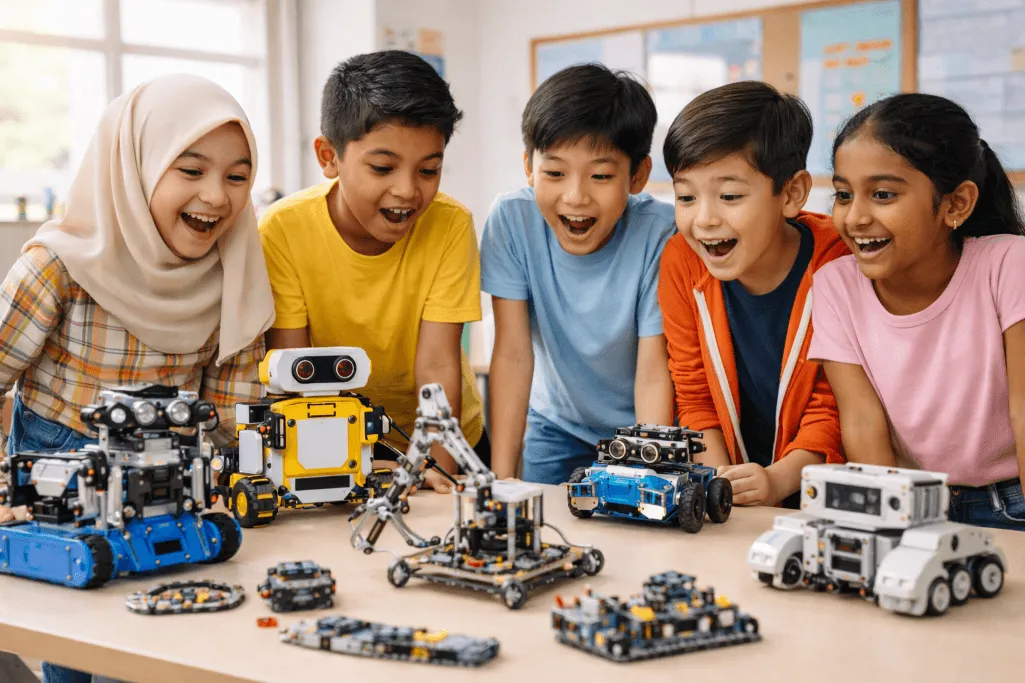
By transforming abstract theories into hands-on, inquiry-driven learning experiences, STEM education kits are redefining how Malaysian students engage with science and technology. More importantly, they are helping schools align pedagogy with national workforce goals and global education standards.
STEM Education in Malaysia: Data and Emerging Trends
1. Rapid Growth in STEM Participation
Malaysia has seen encouraging progress in STEM participation:
- STEM enrolment increased from 41.84% in 2019 to 50.83% in 2024, according to the Ministry of Education.
- Participation rose steadily to 45.73% in 2023, signalling sustained momentum.
- The national target remains a 60:40 STEM-to-arts ratio, considered essential for long-term economic competitiveness.
These figures indicate positive policy alignment. However, enrolment numbers alone do not guarantee competency or workforce readiness. The focus must now shift from access to quality of learning experience.
This is precisely where structured, curriculum-aligned STEM education kits become strategically valuable.
Why STEM Education Kits Matter in Malaysian Classrooms
Rather than repeating generic advantages, it is more useful to analyse how STEM kits address specific systemic and educational challenges in Malaysia.
2. Bridging the Gap Between Curriculum and Real-World Skills
Malaysia’s curriculum reforms increasingly promote:
- Inquiry-based learning
- Higher-order thinking skills (HOTS)
- Project-based application
- Cross-disciplinary integration
However, many classrooms still struggle with translating theory into practical understanding.
STEM education kits solve this gap by enabling students to:
- Conduct guided experiments
- Build functional prototypes
- Simulate engineering systems
- Apply mathematical modelling to tangible scenarios
Instead of memorising formulas, students experience cause-and-effect relationships directly. This strengthens conceptual retention and builds analytical reasoning.
Schools seeking structured solutions can explore comprehensive STEM equipment for schools in Malaysia that align with curriculum standards while supporting inquiry-driven teaching.
3. Supporting Future Workforce Readiness
The global labour market increasingly demands:
- Computational thinking
- Engineering literacy
- Digital fluency
- Adaptive problem-solving
- Collaboration and systems thinking
Malaysia continues to face a structural skills gap, particularly in engineering and advanced technology sectors. The ratio of engineers to population remains lower than that of developed economies.
Early exposure matters.
When students engage with robotics systems, electronics modules, coding platforms and engineering design kits, they develop:
- Mechanical intuition
- Logical sequencing skills
- Debugging capabilities
- Design iteration mindset
For example, structured robotics programmes detailed in this STEM robotics kits education guide demonstrate how progressive learning pathways can be implemented from primary to secondary levels.
Such exposure does not merely teach technical skills. It builds confidence in tackling complex systems, a trait essential for Industry 4.0 readiness.
4. Closing Equity Gaps in Learning Access
Educational disparity between urban and rural schools remains a concern in Malaysia. Advanced laboratory facilities and specialised instructors are not evenly distributed.
STEM education kits provide a scalable solution because they are:
- Self-contained
- Modular
- Teacher-supported
- Curriculum-aligned
Even schools without fully equipped science labs can deliver meaningful hands-on activities using structured kits.
This democratises access to experiential learning and reduces reliance on high-cost infrastructure. When supported by experienced education partners offering implementation guidance and training services such as those outlined under education support services, schools can further ensure effective integration.
Equity in education is not simply about enrolment numbers — it is about access to meaningful learning experiences.
5. Enhancing Teacher Confidence and Classroom Innovation
A recurring challenge in STEM education reform is teacher preparedness. While educators are dedicated professionals, many were trained under traditional instructional models.
STEM education kits often include:
- Structured lesson plans
- Teacher facilitation guides
- Assessment rubrics
- Step-by-step experiment frameworks
This reduces cognitive load for teachers and enables smoother classroom implementation.
More importantly, it encourages innovation. Teachers can:
- Introduce design challenges
- Facilitate group problem-solving sessions
- Encourage prototype testing and refinement
When educators feel supported, classroom transformation becomes sustainable rather than experimental.
Working with established STEM solution providers such as MFTech Global ensures that schools receive not only equipment, but also pedagogical guidance and long-term advisory support.
6. Practical Classroom Implementation Strategies
Effective integration determines impact. Below are structured approaches that Malaysian schools are increasingly adopting.
6.1 Project-Based Learning (PBL)
Students work on multi-phase projects integrating:
- Physics principles
- Mathematical modelling
- Basic coding
- Engineering design
For example:
- Designing a simple automated irrigation system
- Building and programming a line-following robot
- Creating a renewable energy prototype
PBL encourages resilience, iterative thinking and reflective learning — competencies valued in higher education and industry.
6.2 Group Collaboration and Communication
Modern workplaces demand teamwork. STEM kits naturally encourage:
- Role delegation
- Peer discussion
- Joint troubleshooting
- Presentation of findings
This builds soft skills alongside technical proficiency.
6.3 Cross-Curricular Integration
One of the strongest pedagogical advantages of STEM kits is interdisciplinary connectivity:
- Mathematics applied through robotics movement algorithms
- Science principles reinforced through engineering builds
- Technology linked with design thinking
Such integration mirrors real-world problem-solving more accurately than siloed subject learning.
Malaysia’s Strategic Vision and Long-Term Impact
Malaysia’s broader economic transformation plans emphasise high-value industries including:
- Advanced manufacturing
- Semiconductor technology
- Artificial intelligence
- Green energy systems
A workforce equipped with applied STEM competencies is essential to support these sectors.
The steady rise in STEM enrolment reflects policy success. However, economic competitiveness will ultimately depend on skill depth and innovation capacity, not just participation statistics.
STEM education kits serve as a foundational layer in this ecosystem by:
- Cultivating engineering thinking from an early age
- Normalising experimentation and iteration
- Encouraging curiosity-driven exploration
- Building technological confidence
These outcomes align directly with Malaysia’s long-term competitiveness agenda.
The Future of STEM Education Kits in Malaysia
Looking ahead, several trends are emerging:
- Greater integration of AI and coding modules
- Increased adoption of modular robotics platforms
- Expansion into TVET pathways
- Stronger industry-education collaboration
As education evolves toward competency-based assessment, hands-on learning tools will become increasingly central rather than supplementary.
Schools that adopt structured STEM ecosystems early are likely to produce students who are:
- Adaptable
- Digitally fluent
- Technically confident
- Innovation-oriented
Conclusion: STEM Kits as a Strategic Enabler
STEM education kits are far more than classroom accessories.
They are strategic enablers that:
- Translate national education policies into actionable learning
- Bridge theory and practical application
- Support teacher empowerment
- Democratise access to experiential STEM learning
- Strengthen Malaysia’s future workforce pipeline
As Malaysia moves closer toward its 60:40 STEM target, the conversation must evolve beyond enrolment statistics to focus on quality, depth and relevance of learning.
Schools are not merely enhancing engagement by integrating structured STEM education kits into curriculum delivery. They are shaping a generation equipped to navigate technological complexity and contribute meaningfully to Malaysia’s economic future.
If your school is exploring ways to make STEM learning more engaging, structured and future-focused, the right tools can make a measurable difference.
Whether you are upgrading existing facilities or building a new STEM ecosystem from the ground up, thoughtfully selected STEM education kits can support both curriculum delivery and long-term student outcomes.
Feel free to explore our STEM solutions or speak with our team to discuss how we can support your school’s objectives in a practical and sustainable way.